On-Grid vs Hybrid Solar System: Which One is Best in Pakistan?
With rising electricity prices and continuous load shedding, many consumers in Pakistan are now comparing on-grid vs hybrid solar system solutions to reduce electricity bills and achieve energy independence. Choosing between an on-grid and hybrid solar system has become one of the most important decisions for residential, commercial, and industrial users.
When discussing on-grid vs hybrid solar system, it is important to understand that both systems generate electricity through solar panels but differ in terms of backup capability, battery usage, investment cost, and working mechanism. On-Grid solar system mainly focuses on reducing electricity bills through net metering, while a hybrid solar system combines solar generation with battery backup for uninterrupted power during load shedding.
In this article, we will provide a detailed comparison of on-grid solar system and hybrid solar system, including their working principles, key features, advantages, and the ideal applications for homes and businesses in Pakistan.
On-Grid Solar System
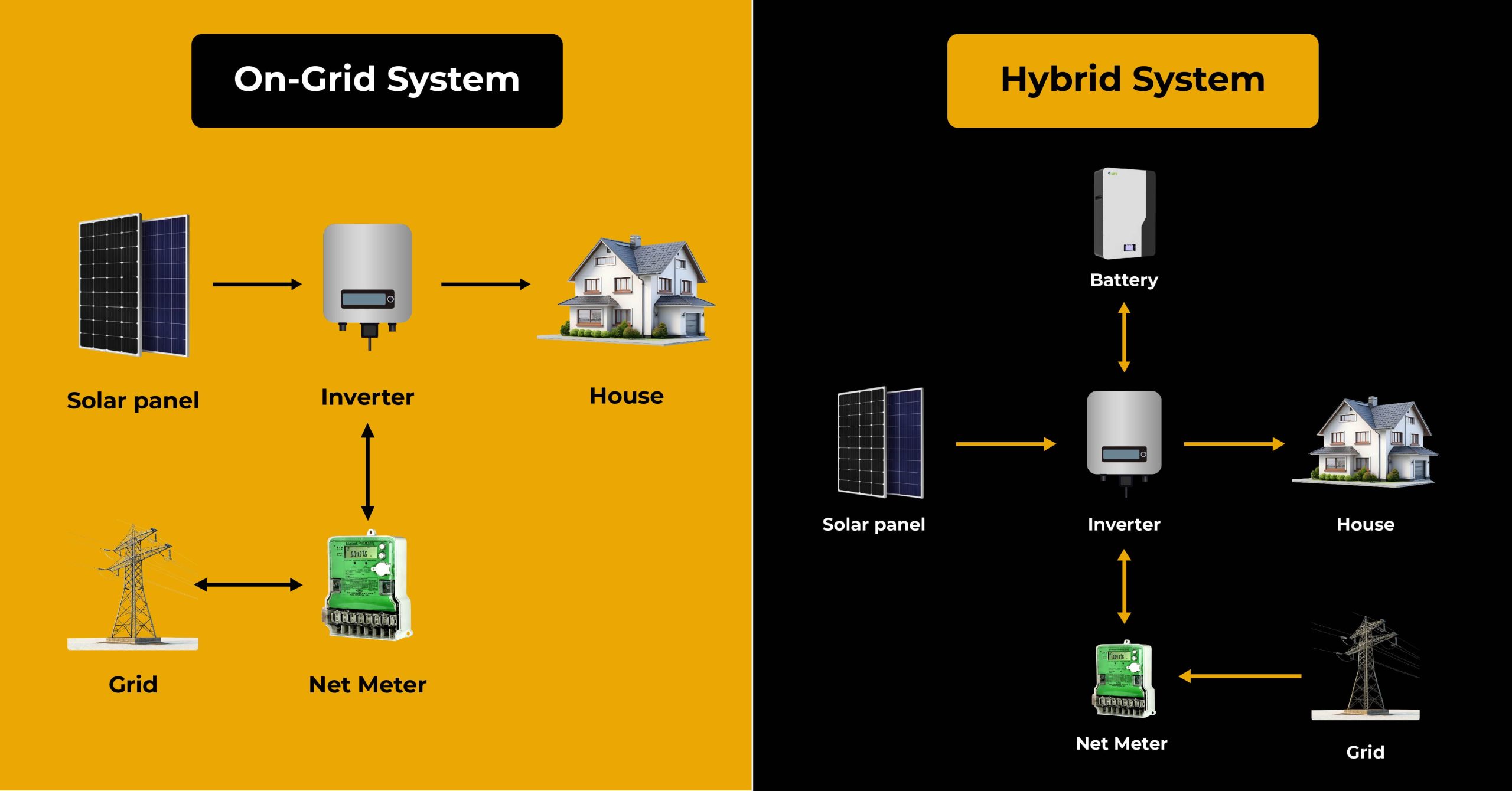
An On-Grid Solar System is directly connected to the WAPDA grid and works without batteries. It is the most commonly installed solar solution in Pakistan because of its lower installation cost and excellent return on investment. The system generates electricity from sunlight during daytime and supplies power to the connected load. Any extra electricity is exported to the WAPDA grid through net metering.
How On-Grid System Works?
Solar panels absorb sunlight through photovoltaic (PV) cells and generate DC (Direct Current) electricity. The generated DC power is sent to an on-grid inverter, which converts it into AC (Alternating Current) electricity used by home and commercial appliances.
During daytime:
- Solar energy first runs the connected load
- Extra electricity is exported to the grid
- The exported units reduce electricity bills through net metering
At night:
- The system imports electricity from the WAPDA grid
During load shedding:
- The on-grid inverter automatically shuts down for safety reasons
- The system cannot provide backup power
Hybrid Solar System
A hybrid solar system combines solar panels, batteries, and the WAPDA grid into one integrated energy solution. In the discussion of on-grid vs hybrid solar system, hybrid systems are preferred by users who require backup during power outages.
How Hybrid Solar System Works?
Solar panels generate DC electricity from sunlight through photovoltaic (PV) cells. This electricity is sent to a hybrid inverter, which converts DC electricity into AC electricity for appliances.
The system works in multiple ways:
During daytime
- Solar energy runs the connected load
- Extra energy charges the batteries
- Additional excess electricity can be exported through net metering
At Night time
- The system uses stored battery power
During load shedding
- Batteries automatically provide backup power
- The inverter continues supplying electricity without interruption
When Batteries Become Low
- The system automatically takes support from the WAPDA grid
Key Features: On-Grid vs Hybrid Solar System
| Features | On-Grid Solar System | Hybrid Solar System | |
| Cost & Investment | Low installation cost with faster ROI | Higher installation cost due to batteries | |
| Backup Power | No backup during load shedding | Battery backup available during outages | |
| System Working | orks only with grid connection | Works with solar, battery and grid | |
| Electricity Savings | Net metering reduces electricity bills | Saves bills while providing backup power | |
| Maintenance & Reliability | Very low maintenance and long system life | Moderate maintenance with energy independence |
Brighten Your Home with Global Energy Solutions Today
When comparing on-grid vs hybrid solar system, the best option depends on your electricity usage, budget, and backup requirements.
Choose an On-Grid Solar System if:
- Your main goal is reducing electricity bills
- Your area has stable electricity supply
- You want maximum ROI with lower investment
- You do not require backup during outages
Choose a Hybrid Solar System if:
- Your area faces frequent load shedding
- You need backup for home or business operations
- You want energy independence
- You can invest in batteries for uninterrupted power supply
For most urban areas with stable electricity, on-grid systems are considered the most cost-effective solution. However, for regions experiencing frequent power failures, hybrid systems provide better reliability and continuous electricity supply.